The Best Time to Visit Rome: By Season and Month (and When Not To)
Rome is good all year, but “good” in April and in August is two different cities: one golden and unhurried, the other a test of heat and crowds. Here’s the breakdown by season and month: when the weather, prices and crowds fall in your favour, and when it’s better to hold off.
In short: when to go
- The best time
- Spring (April–early June) and autumn (mid-September–October): warm 18–26°C, soft light, fewer crowds than summer.
- Avoid if you can
- July and August (heat 30–38°C, crowds) and Easter week (very busy).
- Cheap and quiet
- Winter (November–February): lower prices, shorter queues, but cooler and some rain.
- One recommendation
- May or October: the best balance of weather, light and manageable crowds.
- Booking
- Even off-peak, book the Colosseum and Vatican ahead.
Spring (March–June): the best time
Spring is one of Rome’s two finest seasons. The weather is mild, the gardens bloom, the days are long. April and May are near-ideal for walking: 18–26°C, dry, comfortable all day.
Caveats: Easter and Holy Week are atmospheric but very busy — if you’re not coming for them, these dates are best avoided. 21 April is Natale di Roma, the city’s birthday with reenactments at the Circus Maximus. By late June the heat is already building.
Who it suits: those who want the best weather and a city in bloom; the price is peak rates — book ahead.
Summer (July–August): hot and crowded
Summer in Rome is a test. The stone centre traps heat, temperatures are regularly above 30°C, in August reaching 35–38°C, and all this amid dense crowds at the main sights.
A story of its own is Ferragosto (15 August): many Romans leave, and some family-run trattorias and shops close for a week or two. Meanwhile the major museums and sights stay open, and the city becomes a little freer and, in its way, relaxed.
How to survive it: see things early morning and evening, drink plenty (the free nasoni fountains are everywhere), build in shade breaks and air-conditioning at the hotel. You can go in summer, but comfortable it is not.
Autumn (September–October): the second golden season
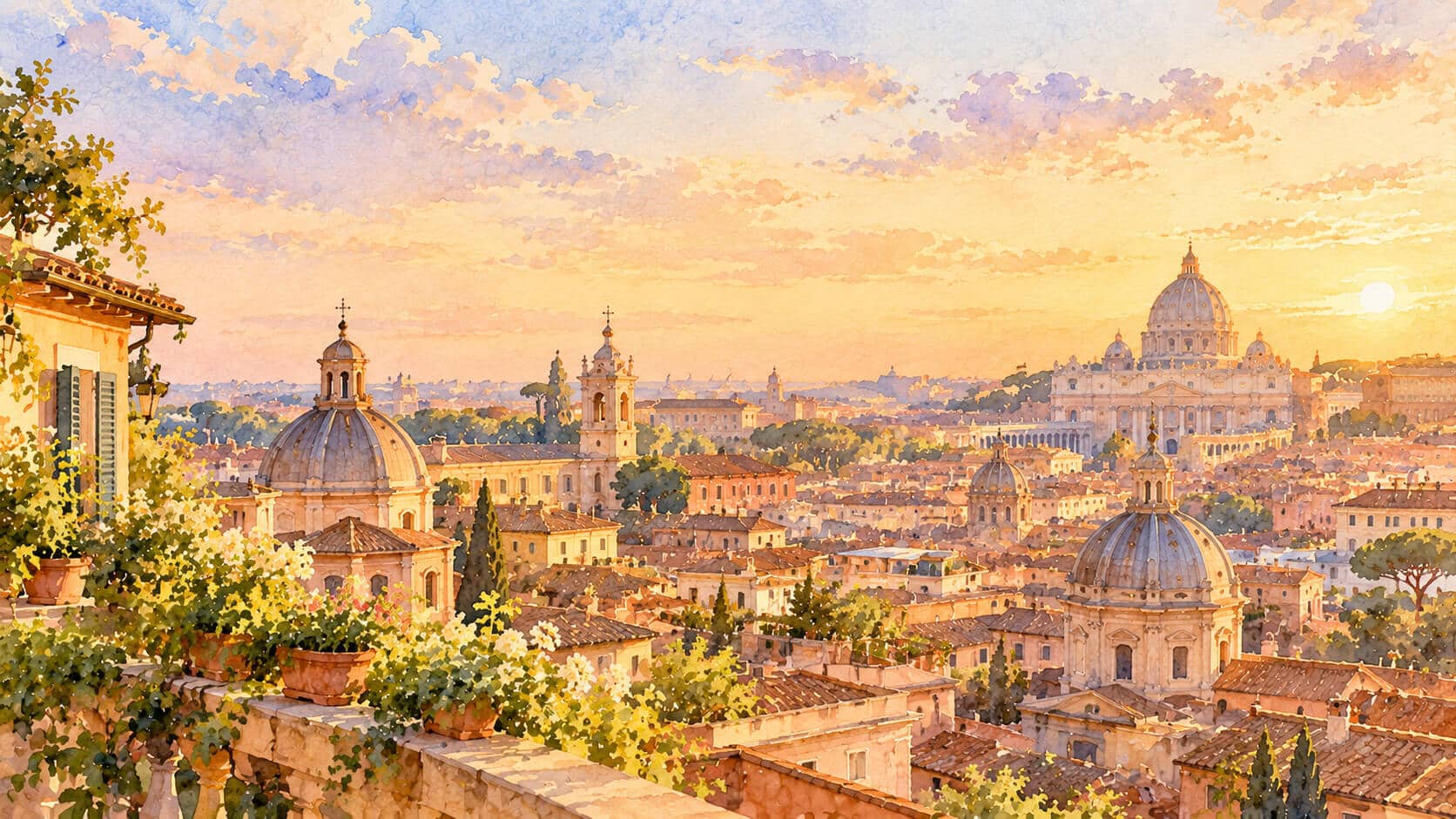
Autumn rivals spring for the title of finest season, and for many it wins. By September the heat breaks; in October it’s 18–23°C and Rome’s famous “golden hour”: low sun on travertine, amber light on the Tiber bridges.
There are fewer crowds than in April–May, and by October prices are noticeably lower. Plus the events: the Rome Film Festival in October, and the autumn season of truffles and chestnuts. September and October are among the best months for Rome, full stop.
Winter (November–February): quiet and cheap
Winter is for those who want Rome without the queues and at low prices. The main sights have minimal waits, hotels are cheaper, the city is calmer. It’s cool but not freezing; rain happens (more often November–December), but in short bursts rather than sustained grey.
The season’s pluses: Christmas and Christmas markets, Epiphany (La Befana, 6 January), and Carnival in February. Ideal for museums, churches and the opera. January and February are the quietest months.
How to choose for yourself
- Best weather
- April–May and September–October.
- Fewest crowds
- Winter (January–February, November) or early autumn.
- Savings
- Winter: prices 20–40% lower.
- Food
- Autumn: truffles, chestnuts, seasonal cooking.
- Avoid
- August (heat) and Easter week (crowds).
What to bear in mind whatever the date
Even off-peak it’s best to get Colosseum and Vatican tickets ahead — named slots go fast in season, and a reservation is required even with a pass. On the first Sunday of the month state sites (including the Colosseum and Borghese) are free, but that means crowds and no online booking. See our piece on Colosseum and Vatican tickets and the Rome Visitor Centre. How many days to allow is in Rome in 1, 2 or 3 days.
Frequently asked
When is the best time to visit Rome?
Spring (April–early June) and autumn (mid-September–October): warm 18–26°C, soft light, fewer crowds. In a word — May or October.
Is it worth visiting Rome in August?
You can, but it’s uncomfortable: heat 30–38°C and crowds. During Ferragosto (15 August) some local places close, though the major sights stay open. See things early morning and evening, and drink plenty.
What’s the cheapest month for Rome?
The winter months (November, January, February): lower prices, shorter queues. The trade-off is cooler weather and some rain.
Which month has the fewest tourists in Rome?
January and February, and also November — the quietest months, with minimal queues at the main sights.
What’s the weather like in Rome in spring and autumn?
Mild: about 18–26°C, dry, comfortable all day. Autumn has especially beautiful light; spring has gardens in bloom.
Do I need to book ahead off-season?
Yes, it’s best to get Colosseum and Vatican tickets ahead year-round: named slots go fast, and a reservation is required even with a pass.
When are Rome’s main events?
21 April is Rome’s birthday (Natale di Roma); the Estate Romana festival runs in summer; the Rome Film Festival is in October; winter brings Christmas and, in February, Carnival.
Rome is never “bad” — only the wrong month is. Want the golden, unhurried city with the best light? Aim for May or October; want quiet and low prices? Winter; going in summer? Build the day around the heat. Once you’ve settled your dates, look in the Rome Visitor Centre or write to us and we’ll build a route to suit your season.